
GI vs Hot-Dip Galvanized Cable Trays
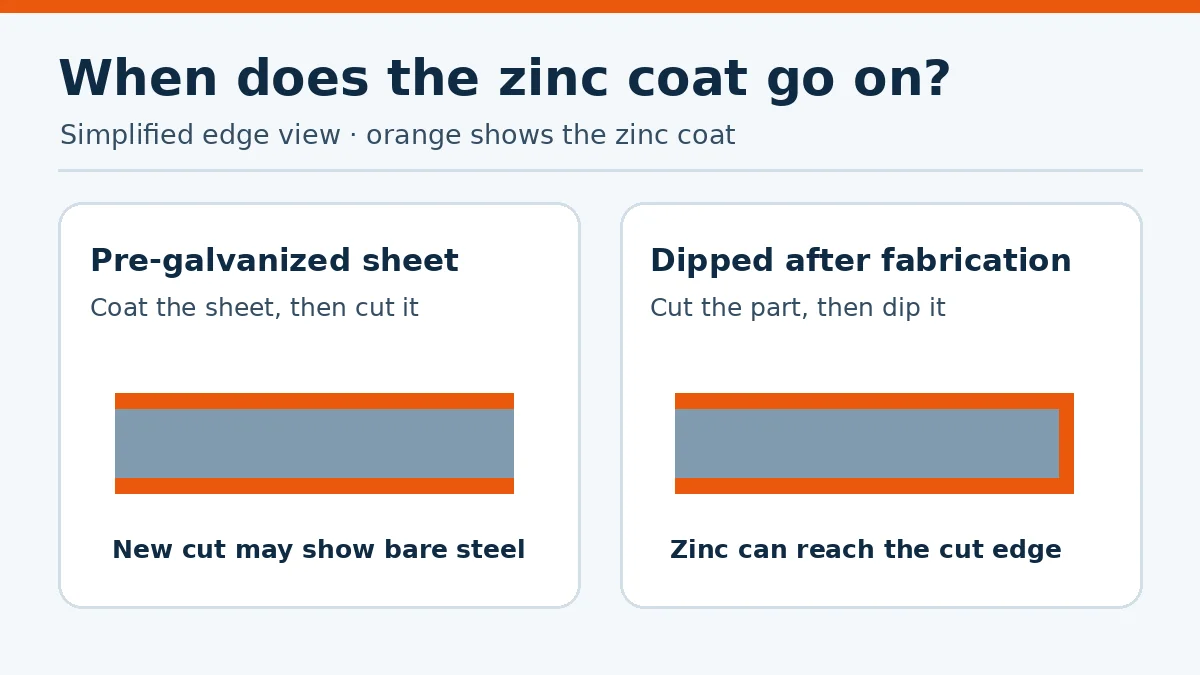
With a GI tray, the sheet often gets a zinc coat first. The shop then cuts and bends the sheet. With a tray dipped after it is made, the shop cuts and bends it first. Then the part goes in hot zinc.

Ask the shop to write when the coat goes on. Hot dipping can be used to coat sheet steel too. Get the full name on the quote. Zinc coating process reference
How the finishes differ
| Check | GI or pre-galvanized sheet | Hot-dip galvanized after fabrication |
|---|---|---|
| Time of coating | The sheet is coated before the tray is made | The finished tray is dipped |
| Edges and holes | Cuts and holes made later can leave bare steel | Zinc can coat cuts and holes made before the dip, where the zinc can reach |
| New cuts on site | Check the job spec for edge treatment | Check the job spec for repair of exposed steel |
| What to ask for | The sheet grade and coat code if the spec calls for them | The coat standard and test record if the spec calls for them |
A new cut made on site can show bare steel on both types. Ask what the job spec says to do with new cuts and holes. A shiny tray can look good in a photo. The photo does not show how thick the coat is.
Zinc coat and cut-edge reference
Step 1. Read the finish note
Check the plan and parts list. Look for the steel grade, sheet thickness and finish. See if the job calls for a coat code or a test record. Check the covers, bends, bolts and supports too. They may have their own finish notes.
Do the plans list two types of coat? Ask the job lead which one to use. Pass that same note to each shop.
Step 2. Tell the shop where the tray goes
Say if the run is in a dry room, out in the rain or near the sea. A run may start in a dry room and end on a roof. Mark both parts on the plan. Get the finish for each part from the job spec.
Step 3. Keep the tray size and finish clear
A zinc coat does not tell you how much load a tray can hold. Want two prices? Use the same tray type and size. Send the steel thickness too. Ask for the load data the job calls for.
Use the cable tray catalogue to name the type. Use the tray size guide to check what to list.
Example. Get a price for each finish
Say the job needs 30 m of tray and four bends. It needs two parts to join wide and narrow tray. Keep that list the same for both prices. Get a price for pre-coated sheet and a price for the tray dipped once it is made. Check if both rates include the bends, covers and supports.
Copy the coat code or standard from the plan to the parts list. If the spec gives a unit for the coat, keep it on the line. Ask the shop to note what is left out. Check the full cost in the tray price guide.
Quick questions
Does GI tell me all I need to know?
No. Ask the shop to name the sheet and the type of coat.
Can I ask for both prices?
Yes, if the job lets you check both. Use the same parts and sizes for each price.
Send your finish note for a quote
Send your drawing, tray sizes, steel thickness and part count. Add the finish note from the plan.
See hot-dip galvanizing or ask Tawakkal for a cable tray quote.