
How to Prepare a Cable Tray BOQ for a Supplier Quote
Download the editable BOQ template →
A bill of quantities, or BOQ, is a parts list. It shows what you need and how much. Start with your plan and mark each run. Add up the straight lengths and count the bends and small parts.
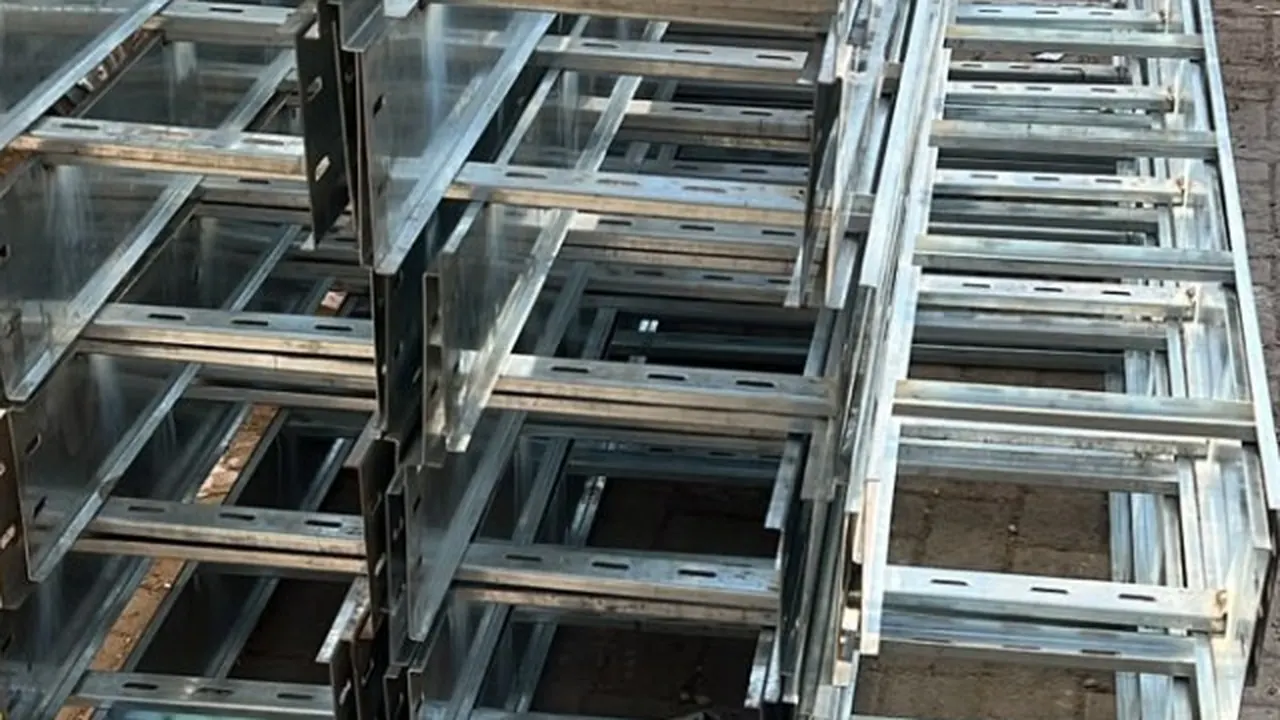
Send the same list to each shop and ask for a price for each line. Then you can see what each quote covers.
Jump to the cable tray BOQ example.
Step 1. Mark the run
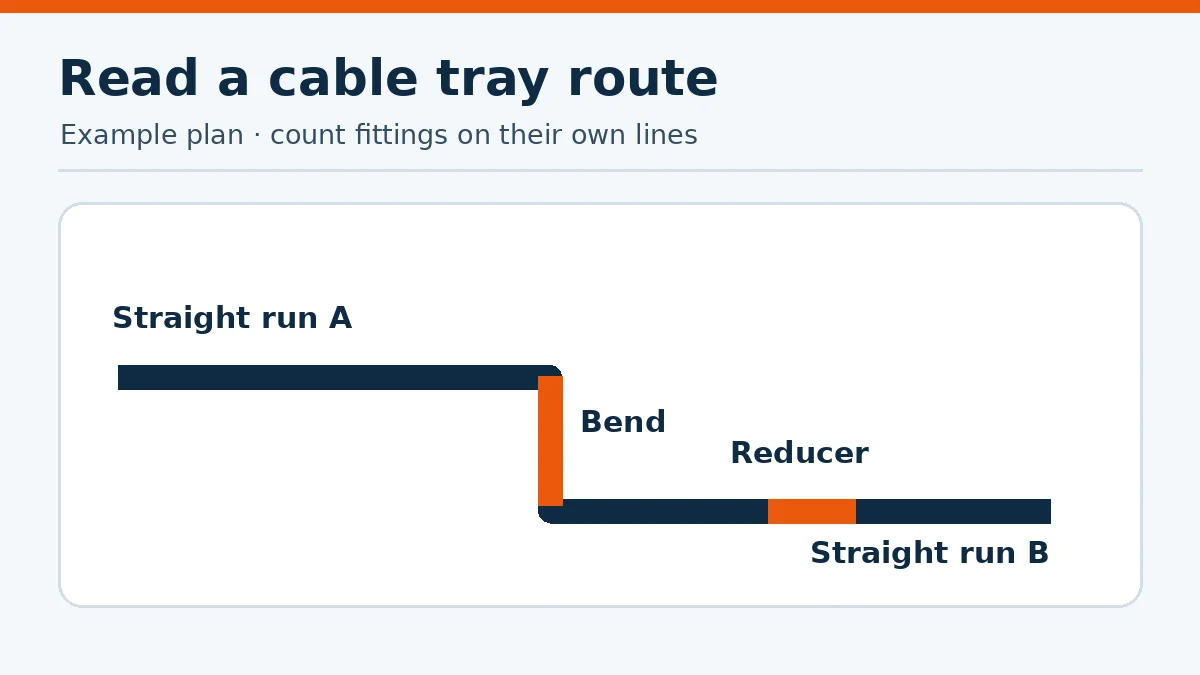
Use the most up-to-date plan. Give each run a name, such as R1. Use that same name on your list. Note the floor and room, then write the plan date and revision.
Mark each turn, rise, drop and split, and show where the tray gets wide or narrow. If you have a sketch, mark the spots you still need to check.
Step 2. Check the straight lengths
Write the length of each straight run in metres. Add the parts that go up or down. A flat plan may show where the tray goes up. It may not show how far.
Keep bends on their own lines. Check where a bend meets the straight tray. Ask for its size if you need it to work out cut lengths.
Metres and stock pieces
Say you need 18 m of straight tray. The shop sells it in 2.4 m pieces. Eight pieces give you 19.2 m. Use that count to start, then check where each cut goes. A spare end may be too short for the next run.
Write the tray width and side height, with each size on its own line. See the cable tray sizes guide.
Step 3. Count the parts that turn or split
One bend can turn the tray left or right. A rise or drop needs a bend that goes up or down. Show which way it goes on the plan. Send a sketch if the turn is hard to see.
| What the run does | What to list |
|---|---|
| Turns at the same height | Angle and size of the horizontal cable tray elbow |
| Goes up or down | Size, angle and turn direction of the vertical bend |
| Splits in two | Main and branch widths for the tee |
| Gets narrow | Both widths and the direction of the perforated tray reducer |
Step 4. List covers, joints and supports
Say which parts need lids, and list lids for bends on their own lines. Ask if the price comes with plates, bolts and nuts.
Use the approved plan for the support count. If that count is not set, mark the line “to be checked”. Check it before you buy.
Cable tray BOQ example
These sizes and counts show how to fill in the list. Use your own plan for your job.
| Code | Item | Unit | Count |
|---|---|---|---|
| R1-01 | Straight tray, 300 × 50 mm | Metre | 18 |
| R1-02 | Straight tray, 150 × 50 mm | Metre | 6 |
| R1-03 | 90° bend for 300 mm tray | Each | 2 |
| R1-04 | Reducer from 300 to 150 mm | Each | 1 |
| R1-05 | Straight lids for the wide run | Metre | 18 |
| R1-06 | Supports | Each | Per approved plan |
Step 5. Ask for the same quote fields
Use the same size, base metal, thickness and finish for each shop. Ask for the unit price and total on each line. Ask what comes with the price and show freight, tax and site work on their own lines. Ask how long the quote is valid.
Check the cable tray catalogue if you need the name of a part. Use the cable tray price guide to compare rates per metre and per piece.
Quick questions
Can I ask for a price with just a sketch?
Yes. Show the run, sizes and turns. Mark the points you still need to check.
Do I need spare tray?
Add a spare line if your job calls for it. Check the cut plan first.
Send the BOQ for a quote
Send the plan, parts list and finish note with your city and the date you need the stock.